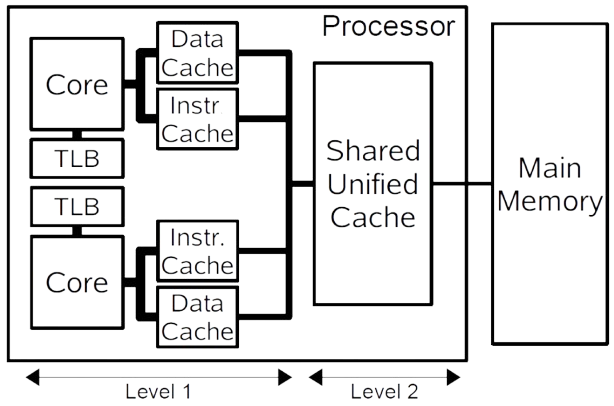
Multi-core architecture
Possible problems:
- deadlocks (happen under Coffman conditions): processes wait for each other
- livelock: processes loop in useless work
- starvation: processes don’t get to use some resource
- race conditions: operations must be done in proper sequence
Race conditions
Leading to non-deterministic results
Solution - low-level synchronization mechanisms:
- monitor: ability of waiting/blocking based on condition
- semaphore: counting variable controlling access to resource
- atomic operations: program operations that cannot be preemptied
Dynamic threads
New constructs: Parallel, Spawn, Sync
Computational complexity analysis of multithreaded model
Assuming constant time for thread spawning and scheduling
- complexity (total time) ~ span: critical/longest path in execution graph
- work (time of parallel threads) ~ of all calls
… number of processors
… time using processors ( … time of sequential processing, … time using unlimited number of processors)
… speedup, … speedup using processors
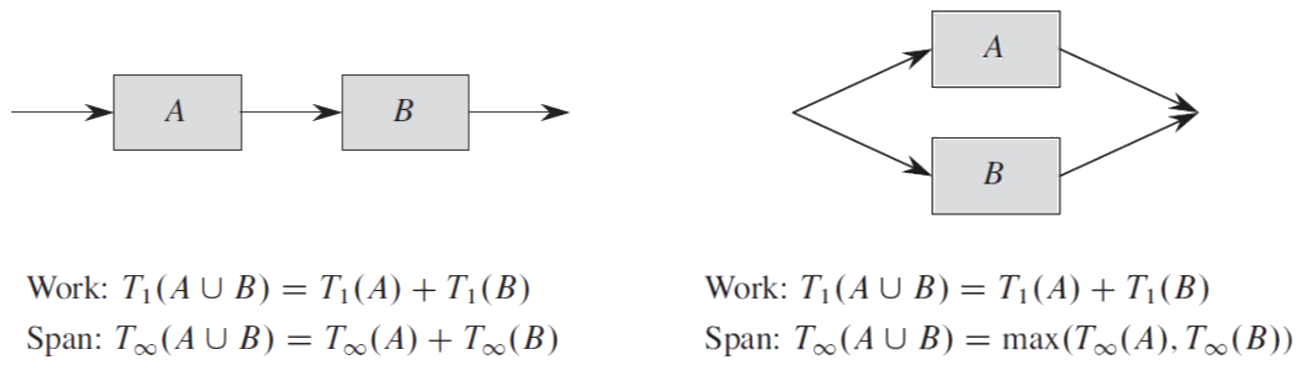
(Same work, but only max() of times)
Fibonnaci
Limits of parallelization
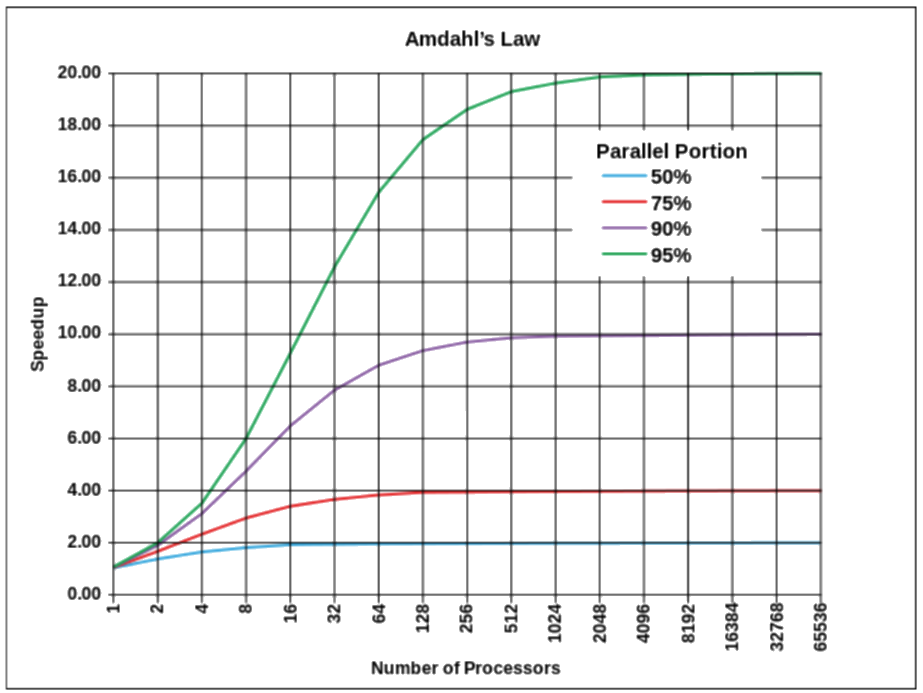
Amdahl’s law
Viewing single problem
… speedup
… proportion of parallelizable code
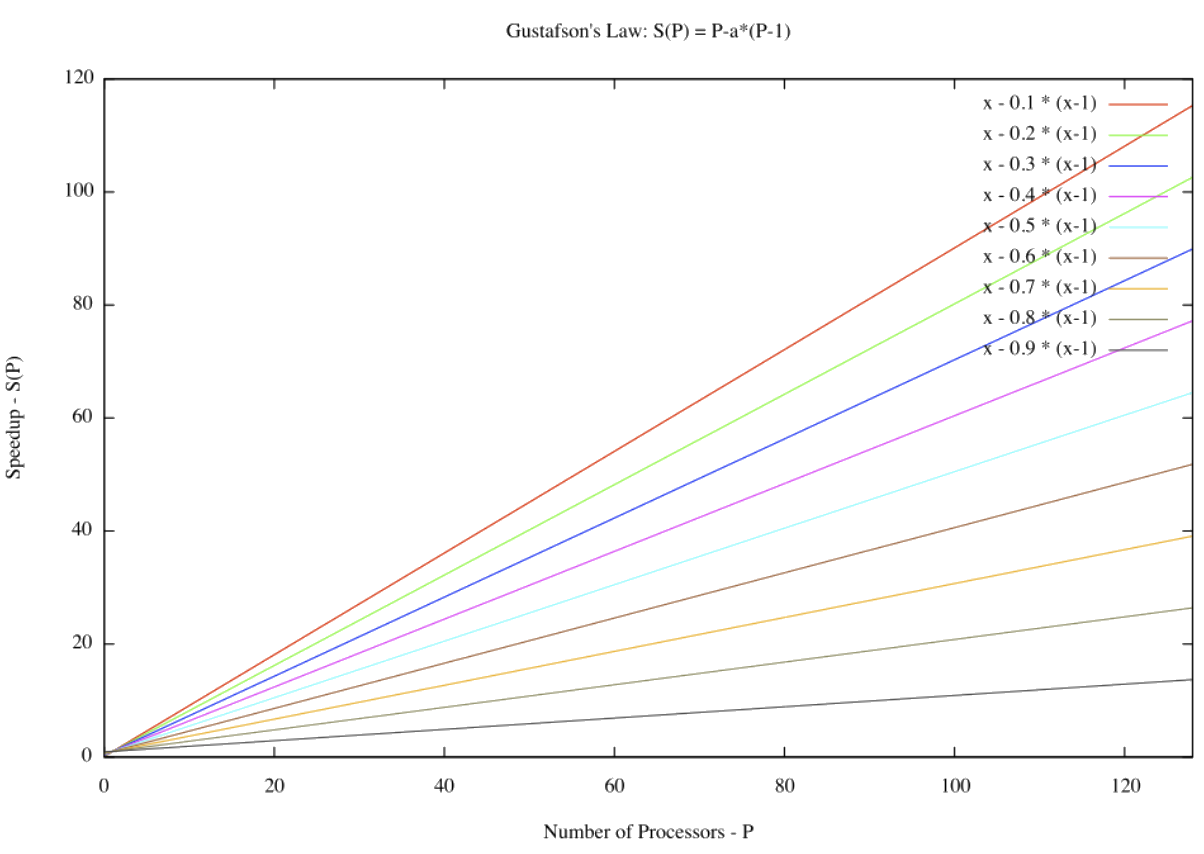
Gustafson’s law
View more/larger problems with more available processors
; … sequential time, … parallel time
… sequential share of work, … share of parallel work